End of line: what to check before choosing a pallet wrapper
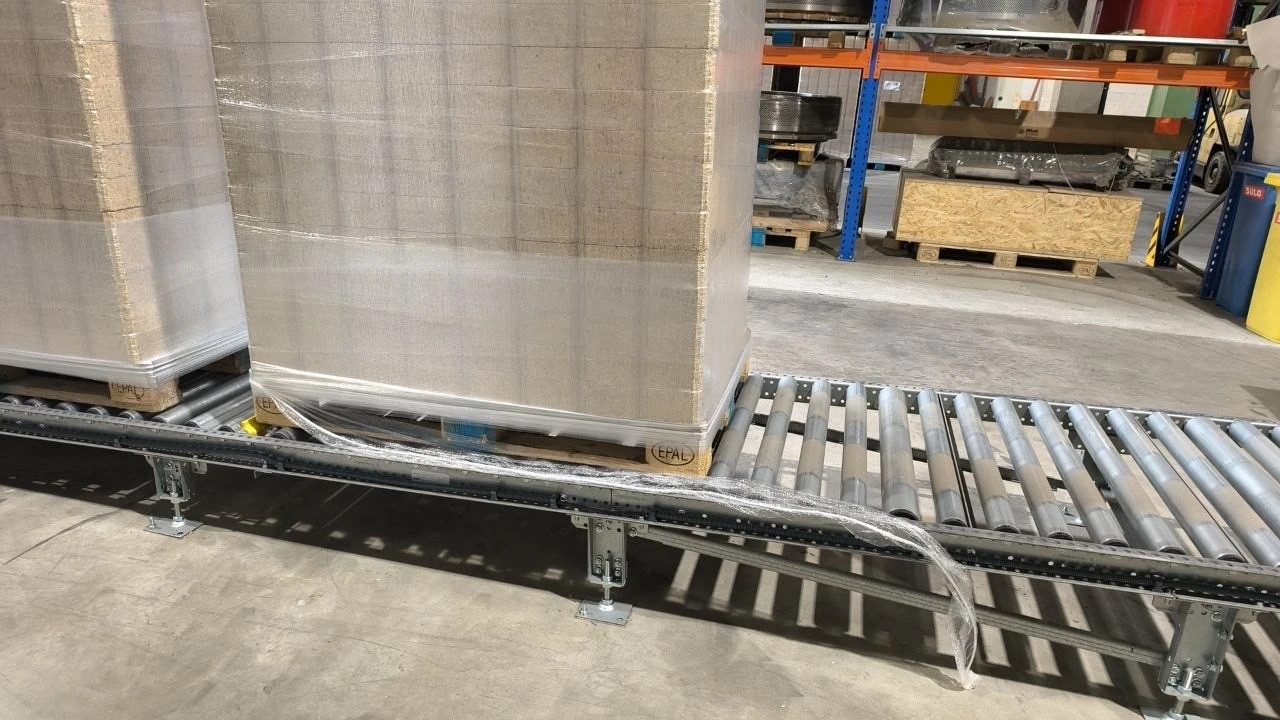
Anyone who works with pallets has seen it: that stray strip of film dangling from a freshly wrapped pallet. On the plant floor, it’s known as the film tail.
It looks like a small thing. Until it snags on a conveyor, throws off a sensor, or gets a pallet rejected by an automated warehouse. At that point, it’s no longer a small thing. It’s downtime.
Here’s the thing: the film tail isn’t the only loose end at the end of a line. It’s just the most visible one. Here are four, and how to spot them before they start costing you money.
1. The film tail: the loose end you can see
A poorly closed pallet looks sloppy, but the real trouble comes later. In facilities with tight tolerances, a loose film end can cause jams, misreads or rejections that force you to stop the line, pull the pallet and start over.
Most of the time, the cause is the film closure: if the end isn’t properly secured, sooner or later it will hang loose.
A question for your plant: how many times a day does someone fix a pallet by hand before it moves on? That time adds up.
2. The machine that doesn’t fit your process: the loose end you put up with
“That’s just how it is.” We’ve heard it many times. Pallets that don’t look like the ones in the catalog, lines with no room to spare, loads that need a different wrapping method, environments with requirements of their own.
When the machine is off the shelf, it’s the process that has to bend.
Before choosing a pallet wrapper, check:
- The actual dimensions and weight of your pallets
- Load stability and product type
- Available space and working environment
- How it integrates with your conveyors and control system
If any of these doesn’t fit, it’s better to find out before you buy than after it’s installed.
3. Maintenance: the loose end that gets left for later
A pallet wrapper runs every day, with the same parts and the same settings. That’s exactly why it’s easy to assume it still performs like it did on day one. But a machine that runs isn’t the same as a machine performing at its best.
Ask yourself:
- When was it last given a thorough check?
- Are the settings still right for today’s pallets?
- How much film does it use per pallet now?
- Are wear parts replaced on schedule, or only once they become a nuisance?
A well-maintained, well-adjusted wrapper runs more smoothly, and it shows in its pace, its film consumption and how many years it lasts.
4. The hidden cost: the loose end you pay for later
The purchase price is only the visible part. The real cost is what it takes to keep the machine running for years: maintenance, spare parts, film, downtime and rework.
One detail that often goes unnoticed is film consumption. The more the film is pre-stretched, the less you need per pallet, and in continuous operation that difference shows up on the invoice.
The way to avoid surprises is to compare the total cost of ownership, not just the price. A cheaper machine today can end up costing more over the years.
So how do we tackle it with the LINE?
At Tech-M, we build the LINE, our automatic pallet wrapper, with these four loose ends in mind:
- No film tails: the film is cut and sealed at the end of the cycle, so the pallet comes out closed, stable and with no loose ends.
- Fits your process: it’s configurable, with options such as a motorized top press that stabilizes the load, blade film cutting, a stainless steel version or a dual film roll carriage. Pre-stretch ratios of 100%, 150% and 250% are available.
- A manufacturer that has your back: we design and build it ourselves. We handle commissioning, maintenance and spare parts, with no middlemen.
- Built to last: there are LINE wrappers built in 1995 that are still running today, and we’re proud of that. The secret? We never changed what already worked. Today’s LINE performs just as well as the one from back then.
Tying up the loose ends
An end of line with no loose ends isn’t one without problems. It’s one where the problems were anticipated: a pallet that comes out sealed, a machine that adapts, a manufacturer that has your back, and a cost you understand from day one.
So, how many loose ends do you have at your end of line?
Tell us and we’ll go through it together.
